
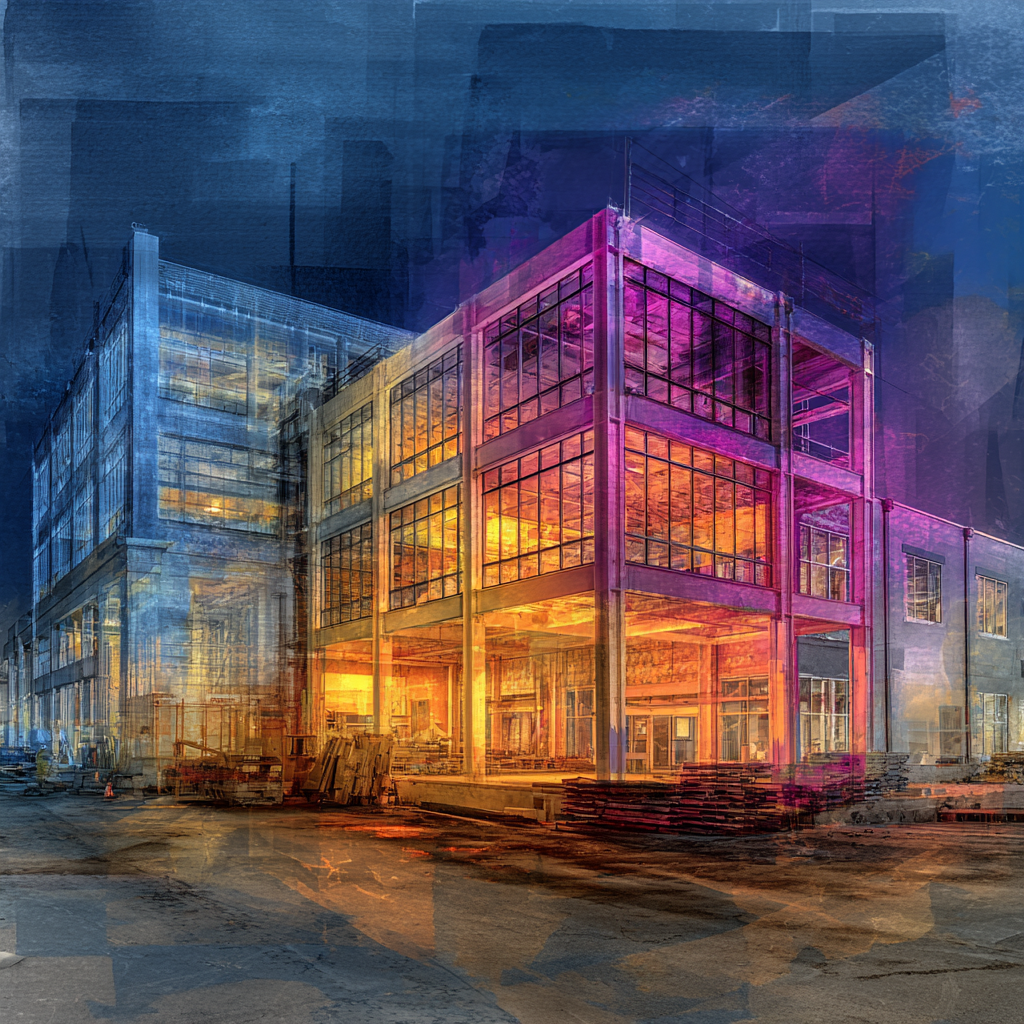
Cutting Through the Noise
Construction is full of moving parts — design teams, contractors, specialists, and client-side stakeholders. Reports, dashboards, and progress updates flood every project. Yet what clients rarely get is straight talk about why projects succeed, why they fail, and what really drives outcomes.
From my experience across healthcare, manufacturing, pharma, and hospitality projects in the UK and Ireland, the difference isn’t usually design brilliance or contractor strength. The real risk — and the real opportunity — lies in coordination and integration. More specifically, it lies in who takes ownership of them.
Too often, no one does. Coordination gets treated as a box-ticking exercise, integration is pushed off to “figure out later,” and the result is a cycle of hidden costs, delays, and frustrated clients. This blog is my way of shining a light on that reality.
Every week, I’ll share candid lessons and perspectives from the front line of project delivery. Some of them will be uncomfortable truths. Some will challenge the industry’s reliance on “the way things have always been done.” But all of them will be focused on giving clients clarity.
For this first post, let’s start with the costliest blind spot of them all: the hidden cost of poor coordination, and why ownership of integration is what truly defines project success.
Greenfield Perfection vs. Brownfield Reality
On paper, technology should have solved coordination issues by now. With advanced BIM models, AI-enabled clash detection, and digital twin tools, the industry can design new builds with near-perfect accuracy – if the project is on a clean slate.
If you’re standing on a true greenfield site, it’s relatively straightforward: everyone works to the same standard, the data is clean, and coordination becomes an exercise in diligence and communication.
But reality is rarely so simple. Most new construction today is not isolated. Instead, projects are often expansions or upgrades to existing facilities: hospital extensions, upgrades to manufacturing or pharmaceutical plants, campus refurbishments, or hotel redevelopments.
And that’s where the problems start. Technology is only as good as the information you feed it. With older facilities, that information is almost always incomplete, inconsistent, or out of date.
The Legacy Data Problem
Many clients assume their estate records are reliable – until a project truly tests them.
- Drawings are inaccurate. As-built drawings often bear little resemblance to the actual facility, especially after years of incremental changes.
- O&M manuals are incomplete. Small upgrades, emergency fixes, or compliance adjustments are rarely documented properly.
- Plant records don’t reflect reality. Switchboards, risers, and mechanical plant often diverge from what’s on paper after decades of reactive maintenance.
Even the most advanced BIM model depends on this information. If the baseline data is wrong, the model is wrong.
In theory, the data could be fixed. Commissioning surveys, laser scans, and investigative works could bring a legacy building up to a fully detailed BIM model suitable for facilities management. But for large facilities, this can take weeks or months and add significant cost before the project even begins.
That step almost never happens at tender stage. Instead, the project proceeds on assumptions. The new build is designed to high standards, while the integration into the existing facility is left vague. The hope is that someone will figure it out later. Unfortunately, that someone usually ends up being the client’s representative or the construction manager, scrambling to bridge the gap reactively once problems surface on site.
When Technology Isn’t Enough
This is where the myth of technology as a cure-all collapses. BIM and AI tools are powerful, but they cannot invent data that doesn’t exist.
No clash detection algorithm will save you when:
- A new duct run collides with a 40-year-old structural column that was never shown on the drawings.
- A chilled water line isn’t where records say it should be.
- The main electrical switchboard, last upgraded in 1998, doesn’t have the spare capacity the design assumed.
By the time these issues surface, you’re already in construction. And that transforms technical problems into costly time bombs:
- Delays while engineers scramble to redesign on the fly.
- Extra costs because rework and redesign weren’t priced into the tender.
- Frustration because clients feel blindsided by problems they assumed would have been caught.
The lesson is simple: technology accelerates good data, but it cannot fix bad data.
The Human Factor: Local Knowledge and Proactive Coordination
This is why, regardless of technology, there is still no substitute for human expertise and proactive management.
When tying new into old, success depends on two critical elements:
- Local knowledge. People who know the facility, who have lived through its changes, and who can point out the unwritten truths that never made it onto drawings.
- Proactive coordination. Management that brings every specialist to the table early, forces clarity around integration, and asks the uncomfortable questions before construction starts.
Without these, projects inevitably fall into reactive mode. And reactive delivery is where costs and timelines spiral.
The importance of the human factor is even greater in live operating environments. In a hospital, a poorly planned shutdown can disrupt patient care. In a pharmaceutical plant, an unplanned change can trigger costly re-validation. In manufacturing, downtime can cost tens of thousands per hour. In hospitality, poor service coordination can damage reputation and revenue. In all these sectors, ownership of integration isn’t optional – it’s critical.
Why Clients Don’t See It Coming
If these issues are so common, why don’t clients demand better from the start? The truth is, the risks are often hidden or downplayed until they explode later.
In pre-construction, everyone’s attention is on the new build: the spec, the drawings, the programme. Integration into the old facility is treated as an afterthought.
In tendering, contractors are under pressure to win the job with the lowest price and shortest programme. There is no incentive to highlight messy uncertainties. Integration risks are quietly ignored.
Only once construction begins do the gaps surface. By then, options are limited, time is short, and the client bears the frustration and financial burden.
The CloneStrand Approach
At CloneStrand, we see our role differently. Technology is essential — and we use it at every stage — but it is not enough on its own.
Our job is to:
- Ask the hard questions early. What do we actually know? What assumptions are hiding in the design?
- Bring operational realities into the design room. Don’t just design the new. Plan how it connects to the old.
- Force clarity before tender. Push integration risks onto the table so they’re priced honestly, not hidden.
- Protect the client’s interests during construction. Ensure legacy issues don’t become hidden costs, delays, or disputes.
It’s not glamorous, but it’s the difference between a smooth delivery and a painful one.
A Forward-Thinking Mindset
Some might say this integration problem is just the way construction is. We disagree.
Technology is transforming the industry – BIM, AI, digital twins, predictive analytics. We embrace them all. But these tools are only effective when combined with management that understands legacy constraints, operational realities, and the importance of coordination.
Our approach is simple: technology first, but never technology alone. We stand at the interface between the new and the old, ensuring both work together seamlessly.
Looking Ahead
This blog is just the beginning. Each week I’ll share more insights from the front line of project delivery: the hidden risks, the opportunities, and the strategies that actually work.
If you’re planning a project tied into a live, operational facility, don’t assume technology will solve everything. By all means, use the latest tools. But also ask: who is taking ownership of the messy join between the new and the old? Because that’s where projects truly win or lose.
Closing Thought
At CloneStrand, we don’t just deliver new builds. We make sure new and old work seamlessly together — with technology where it helps, and expertise where it’s irreplaceable.